If you got into difficulty in the water, would you know what to do?
That’s the question firefighters are asking residents in County Durham and Darlington as they issue life-saving water safety advice.
County Durham and Darlington Fire and Rescue Service (CDDFRS) has teamed up with Durham County Council and Darlington Borough Council to raise awareness ahead of the Easter holidays, when many young people and families may be looking to spend time at popular rivers, lakes and beaches in the North East.
CDDFRS Station Manager Kevin Bell urged anyone who does get into difficulty in the water to float on their back.
Station Manager Bell said: “We want everyone to enjoy visiting their favourite spots of open water this Easter, but we urge you to do so safely without taking any risks.
“When it’s warm and sunny, it can be so tempting to cool off in the water, but the reality is that the water in our sea, lakes, rivers and reservoirs is still extremely cold - even on the hottest of days.
“There are also dangers hiding underneath the water, such as strong currents - which you can't see from the surface - but can pull even the most experienced swimmers under the water.”
He continued: “If you do find yourself in difficulty in the water, float on your back.
“Tilt your head back with your ears under the water and use your hands to help you stay afloat.
“When you are floating, call for help or try to steer with your arms towards shore.”
The Service is also warning people to never enter the water to try and help someone and instead follow the ‘Call, Tell, Throw’ guidance.
- Call 999 and ask for the fire service or the coastguard if you are at the coast, explaining where you are. You can use landmarks or the ‘what3words’ app to help direct crews to your location.
- Tell the person in the water not to panic and to float on their back.
- Throw them something that floats such as a throw bag, if nearby. If they are attached to a rope, make sure you hold the end so you can pull the person in.
Station Manager Bell said: “Remember, even if you manage to get the person out of the water, they will always need medical attention as they may have hypothermia or water in the lungs.”
CDDFRS is working with Darlington Borough Council, Durham County Council and Durham Constabulary, as part of the separate County Durham and Darlington Open Water Safety Groups, to inform the public what they should do if they fall into water and how to help someone who is struggling.
Councillor Jim Garner, Darlington Borough Council’s cabinet member for stronger communities, said: “We work closely with the fire and rescue service, police and other partners as part of the Open Water Safety Group to raise awareness of the dangers and promote water safety in a bid to help reduce the number of tragedies.
“As we look forward to the warmer months, and school holidays to come, it’s important that we all do what we can to keep ourselves and our family and friends safe when in and around water.
“That’s why we fully support the fire and rescue service’s efforts and echo their advice to help ensure everyone can enjoy the outdoors safely.”
Cllr Kyle Genner, Durham County Council’s Cabinet member for neighbourhoods, environment and police relations, said: “In County Durham we have lots of lakes, rivers and beaches which are popular places to visit, especially during holidays and periods of hot weather.
“However, it’s important that people are aware of the dangers of open water while enjoying these beauty spots.
“We would strongly encourage people to familiarise themselves with the guidance on staying safe around water, as well as what to do if someone gets into difficulty."
General water safety advice
• Supervise children closely near water such as rivers, ponds, and beaches.
• Carry a mobile phone or a way to call for help.
• Check weather and tide times before visiting the coast.
• Swim at lifeguarded beaches where possible.
• Follow warning signs and safety advice at beaches and rivers.
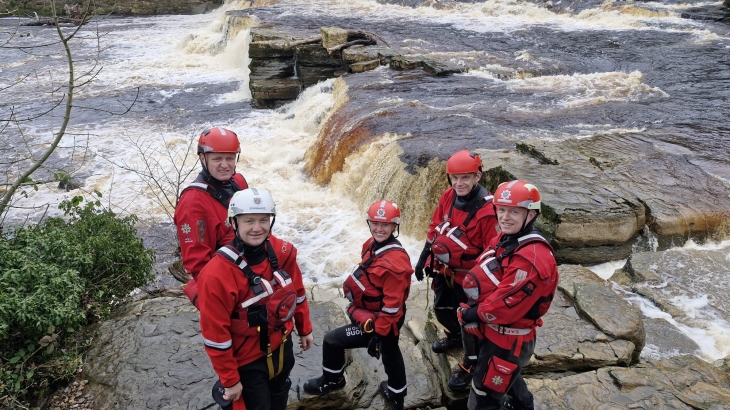
Caption: Bishop Auckland firefighters carry out water rescue training.